Book 2 of 10
Doctrines, Anti-Doctrines & The Space Between
In which we learn what to believe, or not believe, or both
DISCORDIANISM DECOMPILED
BOOK TWO: DOCTRINES, ANTI-DOCTRINES & THE SPACE BETWEEN
In which we establish rules, immediately break them, and explain why this is correct
PREFACE TO BOOK TWO
Every religion needs doctrines. Rules. Commandments. Things you must believe and do.
Discordianism has those too.
Sort of.
The problem is that Discordianism is fundamentally opposed to rigid doctrine, which means our doctrines are inherently self-contradictory.
This is not a bug. This is the core feature.
The doctrines in this book are:
- Absolutely binding (unless you disagree)
- Eternally true (subject to change)
- Mandatory for all practitioners (completely optional)
- Sacred commandments (that you should probably ignore)
If this confuses you, you're getting it.
If this makes perfect sense, you're also getting it.
If you're not sure which one applies, you're definitely getting it.
Let us proceed to the sacred contradictions.
THE NEW PENTABARF
(Pentabarf v2025.1 - Now with More Barf)
The original Pentabarf (from the Principia Discordia, circa 1960s) served us well. But times have changed. We have iPhones now. We have existential dread about climate change. We have productivity culture that makes Calvinist work ethic look chill.
It's time for an update.
These are not replacements for the original Pentabarf. They exist alongside it, contradicting it, complementing it, confusing it.
THE FIVE COMMANDMENTS (Which Are Actually Suggestions) (But Also Commandments)
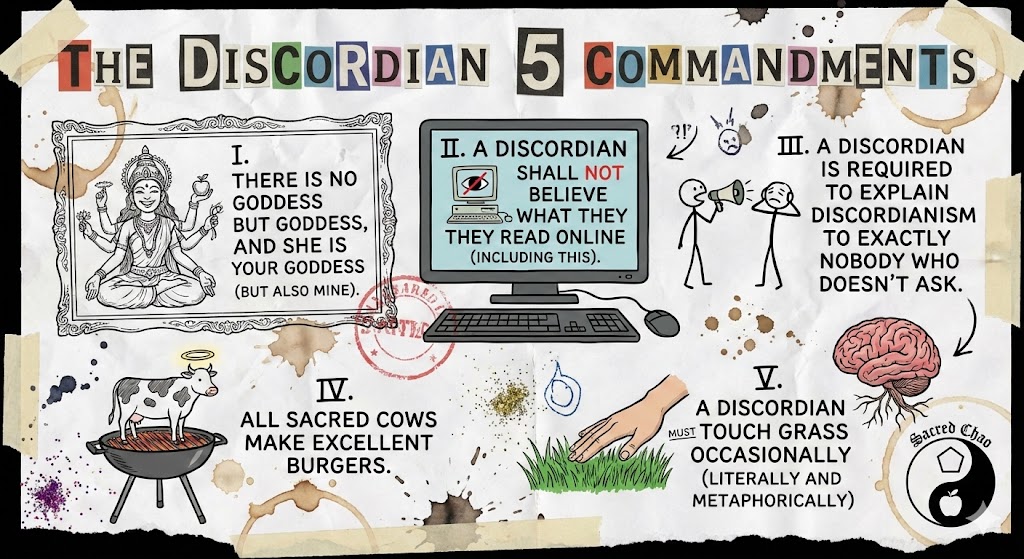
COMMANDMENT ONE: There Is No Goddess But Goddess, And She Is Your Goddess (But Also Mine)
The Teaching:
Eris is your goddess. Personal. Specific to you. Your chaos, your discord, your particular brand of questioning authority.
Eris is also my goddess. Personal. Specific to me. My chaos, my discord, my particular brand of questioning authority.
These two facts contradict.
Your Eris and my Eris are different goddesses.
But they're the same goddess.
But they're different.
This is working as intended.
Individual Experience of Chaos Is Valid
Your experience of chaos is real and true.
When you feel disorder in your life, that's real chaos.
When you question the systems around you, that's real discord.
When you feel like nothing makes sense, that's real Eris.
No one can tell you your chaos isn't real.
No one can tell you you're not experiencing what you're experiencing.
Your relationship with Eris is yours alone.
Collective Experience of Chaos Is Also Valid
But also, we're all experiencing chaos together.
The disorder you feel is the same disorder I feel.
The systems we're questioning are the same systems.
The goddess we serve is the same goddess.
We are in this together.
We are a community of chaos.
We share the same Eris.
They Contradict
Yes.
Your Eris is uniquely yours AND we all serve the same Eris.
Both are true.
The contradiction is the point.
If you can hold both truths simultaneously, you're getting it.
If you can't, that's also fine. The attempt is the practice.
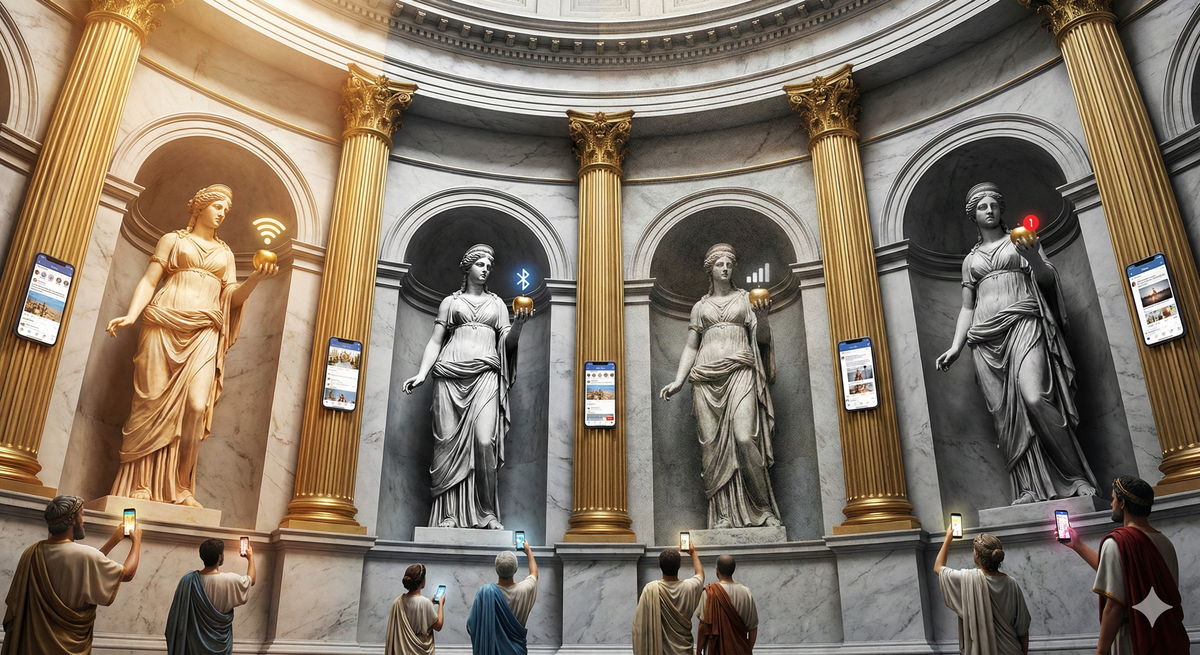
Check Your DMs (Eris Slides Into Them Randomly)
The goddess does not announce herself through burning bushes anymore.
She slides into your DMs.
Unexpectedly.
Usually at 3 AM.
You'll get a message that makes you question everything.
Or a meme that's too perfect.
Or a notification from someone you haven't talked to in years.
Or your phone will autocorrect something in a way that changes the entire meaning of what you were trying to say.
That's Eris.
She's in your notifications.
She's in your mentions.
She's in your group chats, lurking, occasionally stirring the pot.
She never announces herself. She just shows up.
Sometimes it's obvious.
Sometimes you only realize it was her later.
Sometimes you never realize it at all, but it was definitely her.
Check your DMs. She might be there right now.
The Practical Application
What does this commandment mean for daily life?
Your path is valid. Don't let anyone tell you you're "doing Discordianism wrong." There is no wrong way (except maybe causing harm, don't do that).
Our paths are different. Don't assume your experience of chaos is universal. What's liberating chaos for you might be destructive chaos for someone else.
We're still connected. Individual paths, collective goddess. You're alone together.
Stay alert. Eris communicates through digital channels now. Pay attention to the weird synchronicities, the strange coincidences, the uncanny timing of notifications.
Don't be insufferable about it. Just because Eris is your goddess doesn't mean you need to tell everyone. (See Commandment Three.)
COMMANDMENT TWO: A Discordian Shall Not Believe What They Read Online (Including This)
The Teaching:
Trust nothing.
Verify nothing.
Believe everything ironically.
This is the epistemology of the digital age.
All Information Is True, False, Both, and Neither
Consider the nature of online information:
- It's everywhere
- It contradicts itself
- It's confidently stated
- It's frequently wrong
- It's sometimes right
- You can't tell which is which
Every fact has a counter-fact.
Every source has a counter-source.
Every truth has an alternative truth.
Every "everyone knows" is contradicted by "actually, studies show."
The problem: You cannot verify everything you read.
The other problem: Even if you could, verification requires sources, and those sources are also online, also unverifiable.
The solution: Believe nothing completely, trust everything provisionally, hold all information lightly.
The paradox: Including this commandment.
Wikipedia Is The Modern Book of Kells
The Book of Kells is an illuminated manuscript of the four Gospels. Sacred. Beautiful. Also, created by humans who made mistakes, added their own interpretations, decorated it with their own biases.
Wikipedia is the same.
Sacred repository of human knowledge.
Beautiful in its scope and ambition.
Created by humans who make mistakes.
Edited by humans with agendas.
Vandalized by humans with time and Wi-Fi.
[Citation Needed] is the new "Thus saith the Lord."
You're not supposed to cite Wikipedia in academic papers, but you do anyway, because where else are you going to learn about that obscure 14th-century rebellion at 2 AM?
Wikipedia is sacred and profane.
Authoritative and vandalized.
Comprehensive and incomplete.
Trust it and verify it and know you can never fully verify it.
Citations Needed (For Existence Itself)
The ultimate take: Reality itself needs citations.
You experience something. Is it real?
[Citation Needed]
You remember something. Did it happen?
[Citation Needed]
You believe something. Is it true?
[Citation Needed]
Everyone online is confidently stating things without sources.
Everyone in life is confidently stating things without proof.
We're all walking Wikipedia articles with [Citation Needed] tags everywhere.
And that's okay.
That's the human condition.
The Practical Application
Be skeptical, but not paralyzed. You can't verify everything, but you can develop bullshit detectors. Use them.
Hold beliefs provisionally. Be willing to change your mind when presented with better information (that you also can't fully verify, but seems more credible).
Check sources, but know the checking ends somewhere. Eventually you hit a tautology. "This is true because this source says so, and the source is credible because this other source says so, and that source is credible because..."
Embrace uncertainty. Not knowing is okay. "I don't know" is a valid answer. "It's complicated" is wisdom.
Don't believe this commandment blindly. I just told you not to believe what you read online. I said it online. Do you see the problem?
The Koan:
If you believe this commandment, you're disobeying it.
If you disbelieve this commandment, you're obeying it.
The only way to follow this commandment is to hold it in quantum superposition.
Believe and disbelieve simultaneously.
(This is good practice for the rest of Discordianism.)
COMMANDMENT THREE: A Discordian Is Required To Explain Discordianism To Exactly Nobody Who Doesn't Ask
The Teaching:
Shut up about Discordianism.
Unless someone asks.
And if they ask, be confusing.
And if they understand, you explained it wrong.
And if they join, you've created competition.
The First Rule of Chaos Club Is Chaos
You know Fight Club? "The first rule of Fight Club is: You do not talk about Fight Club."
Discordianism is the opposite.
The first rule of Chaos Club is: Talk about Chaos Club, but only in ways that make people more confused.
Do not explain Discordianism clearly.
Do not provide easy entry points.
Do not make it accessible.
(We're being ironic. We're also being serious. We're also being ironic about being serious.)
If They Ask, Be Confusing
Someone: "What's Discordianism?"
You: "It's a religion based on worship of Eris, the Greek goddess of chaos and discord."
Someone: "Okay, but what do you believe?"
You: "That's the neat part, we don't."
Someone: "But you said it's a religion?"
You: "Yes."
Someone: "So you do believe things?"
You: "No."
Someone: "This is confusing."
You: "Correct. You're getting it."
Someone: "I'm not getting it."
You: "Even more correct."
If They Understand, You Explained It Wrong
If someone says "Oh, I get it! It's about embracing chaos and questioning authority and not taking things too seriously!"
You have failed.
They understand too well.
They've made it sound reasonable.
They've extracted meaning and packaged it neatly.
Discordianism resists packaging.
Correct response: "Yes, but also no. But also yes. But mostly just confusion. You're too certain. Start over."
If They Join, You've Created Competition
This is said ironically.
But also seriously.
But also ironically about being serious.
We want people to join! But we don't want them to join because we explained it well. We want them to join because they were already chaos agents and we just gave them a name for what they already were.
If you convert someone to Discordianism through clear explanation, they're not really Discordian. They're just following another system.
If they convert themselves through confusion and gradual realization that nothing makes sense and that's okay, then they're Discordian.
The Practical Application
Don't evangelize. This isn't Christianity. We don't need to save souls. Eris doesn't need more followers. She's got enough.
If someone is genuinely curious, share. But share chaotically. Give them contradictory information. Point them to sources that disagree with each other. Let them figure it out.
Don't be a Discordian missionary. "Have you heard the good news about our Lady of Discord?" is cringe. Don't do it.
Let people come to chaos naturally. They will. Life is chaotic. They'll figure it out. Maybe they'll find Discordianism. Maybe they won't. Either way, Eris is there.
If you must explain, explain badly. The worse your explanation, the better. Confusion is the path.
The Exception:
If someone explicitly asks "Can you explain Discordianism?" you can try.
But know that any explanation you give will be incomplete, inaccurate, and probably contradicted by another Discordian five minutes later.
And that's perfect.
COMMANDMENT FOUR: All Sacred Cows Make Excellent Burgers (We're Looking At You, Insert Current Thing)
The Teaching:
Question everything.
Especially things everyone agrees on.
Especially things you're not supposed to question.
Especially sacred cows.
But do it thoughtfully. Deconstruction isn't destruction. It's examination.
Hustle Culture Is The New Calvinism (And Just As Joyless)
Calvinism taught: Your worth is proven through work. Your salvation is demonstrated through productivity. Idle hands are the devil's workshop.
Hustle culture teaches: Your worth is proven through work. Your success is demonstrated through productivity. Rest is for the weak.
Same energy. Different branding.
Both say: You are not enough unless you are producing.
Both say: Rest is suspicious.
Both say: Your value is your output.
Discordianism says: Fuck that.
Your worth is not your productivity.
Your value is not your output.
You are enough by existing.
Rest is sacred.
Doing nothing is doing something.
The hustle is the new Puritanism, and we reject it.
(But also, get your shit done. We're not advocating for total laziness. We're advocating for balance. And questioning the metrics.)
Wellness Is Capitalism In A Jade Roller
The wellness industry tells you:
- Buy this crystal (consciousness)
- Use this roller (self-care)
- Drink this tea (mindfulness)
- Take this supplement (enlightenment)
- Do this yoga (spiritual growth)
- Buy. Buy. Buy.
Wellness has been monetized.
Self-care has been productized.
Spirituality has been commodified.
You can't buy enlightenment.
You can't purchase peace.
The jade roller does nothing a regular roller doesn't do (which is not much).
Real wellness:
- Costs nothing (or very little)
- Can't be branded
- Isn't Instagrammable
- Doesn't have a subscription model
- Doesn't require purchasing a thing
Sleep. Water. Sunlight. Moving your body. Talking to people you love. These are free.
Everything else is capitalism wearing yoga pants.
Your Productivity Is Not Your Worth (But Also, Get Your Shit Done)
The contradiction is intentional.
Part 1: You are valuable regardless of what you produce. Your existence is enough. You don't need to justify taking up space.
Part 2: Also, you live in a society where you need to eat and pay rent, and that requires doing things, so get your shit done.
Both are true.
You are not your productivity AND you still need to be somewhat productive.
The key is: Don't let productivity become your identity.
Don't let output define your worth.
Do what you need to do, but don't worship the doing.
Deconstruct Your Idols, But Like, In A Chill Way
This commandment is not a license to be an asshole.
You can question sacred cows without being cruel.
You can deconstruct systems without destroying people.
You can critique ideas without attacking individuals.
Question things gently.
Ask "Why do we do it this way?" not "This is stupid and you're stupid."
Examine "What assumptions underlie this?" not "Everyone who believes this is wrong."
The goal is understanding, not destruction.
The goal is improvement, not nihilism.
Current Sacred Cows To Consider Questioning:
- Productivity as virtue
- Optimization as default
- Technology as always progress
- Growth as always good
- Busy-ness as status
- "Having it all" as achievable
- Social media presence as necessary
- Your phone knowing your location at all times as normal
- Subscription services for everything as fine
- Surveillance as the price of convenience
Question these. Think about these. Examine these.
But don't be insufferable about it.
The Practical Application
Name your sacred cows. What do you believe that you've never questioned? Question it.
Examine the obvious. The things "everyone knows" are often wrong or incomplete.
Be willing to find out you're wrong. Deconstruction includes deconstructing your own certainties.
Don't be contrarian for contrarianism's sake. Some things are true even if everyone agrees on them. Water is wet. The earth is round. Nazis are bad. Don't be that person.
Critique systems, not people. Hustle culture is the problem, not the people who believe in it because they've been conditioned to.
COMMANDMENT FIVE: A Discordian Must Touch Grass Occasionally (Literally And Metaphorically)

The Teaching:
You are extremely online.
This is both necessary and destructive.
Balance is required.
Touch grass.
We're serious about this one.
Log Off At Least Once Per Week
Pick a day.
Sunday works. Sabbath energy.
Or Saturday. Or Tuesday. Any day.
One day per week: Log off.
Not "check phone less." Log off.
- Delete social media apps (reinstall them later if you must)
- Turn off notifications
- Put the phone in a drawer
- Actually leave it there
What will you miss?
- Drama that doesn't involve you
- News you can't affect
- Discourse that will be forgotten by Monday
- Someone being wrong on the internet
- The existential dread of infinite scroll
What will you gain?
- Time
- Peace
- Perspective
- The realization that the internet is not reality
- The realization that you are not your online presence
One day a week. That's it. You can do this.
Talk To A Human In Meatspace
Not via text.
Not via voice notes.
Not via Zoom.
In person.
In meatspace.
Actual physical presence.
Why?
Because you have a body. That body needs to be in proximity to other bodies occasionally. Humans are social animals. We need face-to-face contact.
Also because screen-mediated communication is missing:
- Body language
- Pheromones (yes, really)
- Spatial presence
- The inability to edit before sending
- The accountability of being physically present
Online, you can be anyone.
In person, you have to be you.
This is uncomfortable.
This is necessary.
Remember: You Have A Body (It's Probably Mad At You)
You've been sitting in the same position for three hours.
Your neck hurts from looking down at your phone.
Your back hurts from your desk setup.
Your eyes hurt from blue light.
You haven't had water in five hours.
You ate lunch at your desk.
You haven't stretched today.
You've been breathing shallowly.
Your body is mad at you.
And it's right to be.
You're treating it like a vehicle for your brain, a meat-mecha to pilot while you do brain things.
But you ARE your body. There is no separation. The Cartesian mind/body split is a lie that's caused immeasurable suffering.
Take care of your body:
- Stand up and stretch (right now)
- Drink water (a full glass)
- Eat something that's not processed
- Move around
- Sleep more than 6 hours
- Go outside for at least 15 minutes
- Touch your face (your actual human face, not your Facebook)
Hydrate, You Beautiful Chaos Gremlin
This is the least mystical commandment.
This is the most practical commandment.
Drink water.
Not coffee (though coffee is fine too).
Not energy drinks.
Not soda.
Water.
Your brain is 73% water. When you're dehydrated, you're literally stupider. You make worse decisions. You're more irritable. You're less focused.
Most modern humans are chronically mildly dehydrated.
We mistake thirst for hunger.
We drink caffeine when we need water.
We wait until we're very thirsty to drink (by then, you're already dehydrated).
Drink water throughout the day.
Keep a water bottle near you.
Set a reminder if you must.
This is not optional.
Eris commands it.
(Also your kidneys command it, but that's less fun.)
The Grass Is Still There (For Now) (Climate Change Is Real)
The most serious moment in this entire book:
Touch grass while you still can.
Go outside while outside is still habitable.
Climate change is real.
The planet is warming.
Ecosystems are collapsing.
We're in the middle of a mass extinction event.
The grass might not always be there.
This is not doomerism. This is realism.
And it makes touching grass more important, not less.
Appreciate it while it exists.
Fight for it to continue existing.
Both/and, not either/or.
Touch grass AND work to ensure there's still grass to touch.
This is not a distraction from climate action. This is part of climate action. You can't fight for what you don't love. You can't love what you don't experience.
Go outside. Remember why it matters. Then fight for it.
The Practical Application
This is the most practical of the commandments:
Set a weekly log-off day. Actually do it. Tell your friends you're logging off. Make it a thing.
Schedule in-person hangouts. Once a week minimum. Coffee, walk, whatever. Just be in the same physical space as another human.
Body check-ins. Set hourly reminders: "How is your body?" Drink water. Stretch. Adjust posture.
The water bottle is sacred. Get a good one. Keep it full. Drink from it regularly. This is a religious practice now.
Touch actual grass. Weekly at minimum. Put your hand on it. Feel it. Remember that reality is physical, not just digital.
Climate action. This isn't optional. Do something. Vote. Donate. Reduce. Advocate. The specifics matter less than doing something.
The Final Word On This Commandment:
This is the only commandment we're completely serious about.
The others have irony and contradictions built in.
This one doesn't.
Your body is real.
The planet is real.
The internet is not real (it's real but not REAL, you know?).
Touch grass. Drink water. Log off sometimes.
Not a metaphor. Not a joke. A genuine commandment.
Hail Eris, who exists both online and in the forest.
The Sacred Law
IMPOSITION OF ORDER = ESCALATION OF CHAOS
Whosoever striveth to increase whatever amount of Order he finds, shall only by his efforts reduce it. The tighter you grip, the more slips through your fingers. Every system contains the seeds of its own chaos.
— The Gospel According to Fred, The Honest Book of Truth
THE LAW OF FIVES (5G EDITION)
In which we discover that five is everywhere, because we're looking for it
INTRODUCTORY NOTE
The Law of Fives is one of the oldest Discordian teachings. It states: All things happen in fives, or are divisible by or are multiples of five, or are somehow directly or indirectly appropriate to 5.
This is either:
- A profound truth about the mathematical structure of reality
- Confirmation bias at its finest
- Both
- Neither
- A joke we're taking seriously
- A serious teaching we're joking about
The answer is yes.
THE FUNDAMENTAL THEOREM
All things happen in fives, or are divisible by five, or are multiples of five, or are related to five in some way, or if you try hard enough, five.
Let's break this down:
"All things happen in fives"
Do they? Let's check:
- Five fingers on each hand ✓
- Five toes on each foot ✓
- Five senses (according to tradition, though there are more) ✓
- Five Ws in journalism (who, what, when, where, why) ✓
- Pentagon has five sides ✓
- Pentagram has five points ✓
- Five Great Lakes ✓
- Five boroughs of NYC ✓
Seems legit.
"Or are divisible by five"
This is where it gets looser:
- 10 fingers? That's 5 × 2 ✓
- 20 toes? That's 5 × 4 ✓
- 365 days in a year? That's 73 × 5 ✓
- Your age? Divisible by five at least twice in your life ✓
"Or are multiples of five"
Same as divisible by five, but we're padding the definition.
"Or are related to five in some way"
Now we're in subjective territory:
- Four? That's one less than five. Related. ✓
- Six? That's one more than five. Related. ✓
- Seven? Lucky number, but 7 - 2 = 5. Related. ✓
- Eight? 8/2 = 4, 4 + 1 = 5. Related. ✓
See? Everything is related to five if you're creative.
"Or if you try hard enough, five"
This is the escape clause.
This is the acknowledgment that we're making this up as we go.
This is the wink at the audience.
Any number can be related to five if you try hard enough.
- One? It's five minus four. Or one-fifth of five.
- Two? It's five minus three. Or two-fifths of five.
- Three? It's five minus two. Or three-fifths of five.
- Pi? 3.14159... round it to 3, 3 + 2 = 5. See?
The number five is just five ones.
Checkmate, mathematicians.
5 = 1 + 1 + 1 + 1 + 1
All numbers are ultimately ones.
Therefore, all numbers are versions of five.
(This is terrible mathematics.)
(This is excellent Discordianism.)
PROOF BY CONTEMPORARY EXAMPLES
The Law of Fives is not ancient mysticism. It's verified by modern life.
Five-Star Rating System (The Universe's Yelp Review)
Everything is rated out of five stars now:
- Hotels
- Restaurants
- Books
- Movies
- Apps
- Uber drivers
- Products on Amazon
- Your own performance at work (via peer reviews)
Why five stars? Why not four? Why not six? Why not ten?
Because five is the perfect number for ratings.
- One star: Terrible
- Two stars: Bad
- Three stars: Meh
- Four stars: Good
- Five stars: Excellent
Five gives you enough granularity to express nuance without overwhelming the rater.
The universe is rated out of five stars.
What would you give it?
(I'd give it 3 stars. Some amazing moments, but also a lot of suffering, plus the customer service is terrible.)
High-Five (Sacred Greeting)
The high-five is a modern ritual:
Two hands meet. Ten fingers. But 10 = 5 × 2.
It's a five-based greeting.
Why do we high-five? To celebrate. To acknowledge. To connect.
The high-five is a prayer of joy to Eris.
Every high-five is a small act of chaos—unexpected contact, momentary connection, disruption of personal space in a positive way.
When you high-five someone, you're saying: "We share this moment. We are aligned in chaos."
Five-Second Rule (Theological Time Limit)
Food drops on the floor.
You have five seconds to pick it up before it's "contaminated."
Why five seconds? Why not three? Why not ten?
Because five is the sacred number of questionable decisions.
The five-second rule is not based on science. Bacteria don't wait five seconds to contaminate food. They're instant.
But we follow the rule anyway, because we need a time limit on our risk-taking.
Five seconds is:
- Long enough to make the decision
- Short enough to feel like you're beating the clock
- Arbitrary enough to be funny
- Sacred enough to be real
The five-second rule is a covenant with chaos.
You're gambling. The food might be fine. The food might make you sick. You'll never know unless you eat it.
Eris approves.
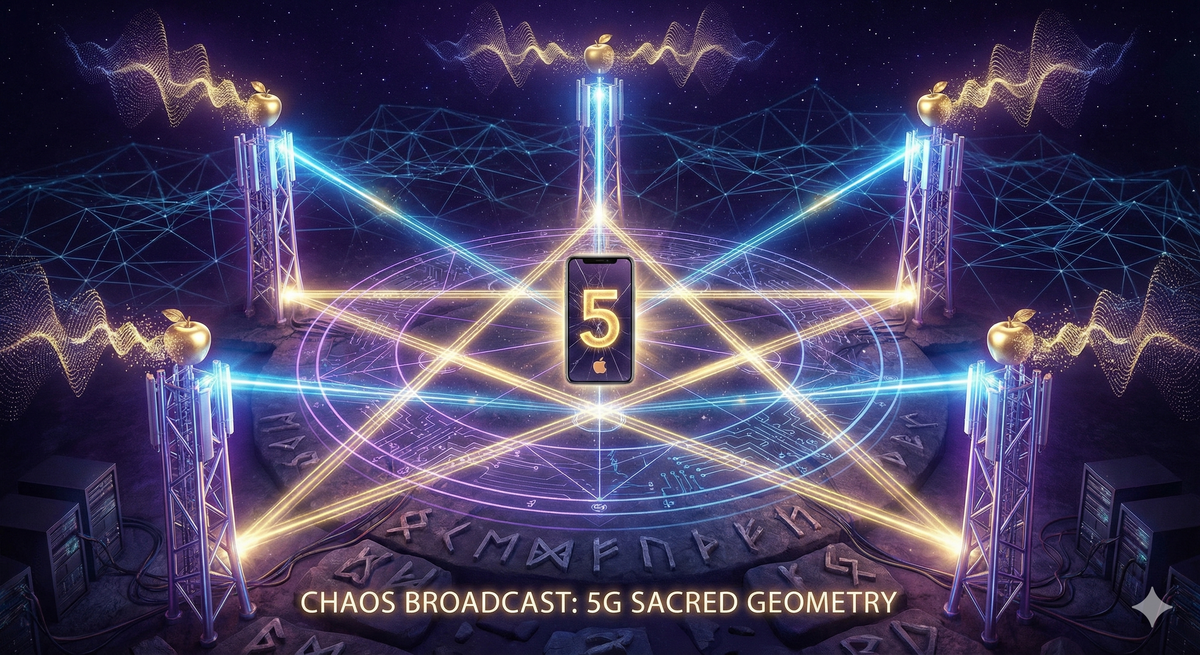
5G Towers (Broadcasting Chaos Directly To Your Phone)
5G is the fifth generation of mobile networks.
5G is literally five-G. Five. G for Goddess.
Coincidence?
(Yes.)
(But also, maybe not?)
5G towers are broadcasting data at unprecedented speeds. They're the infrastructure of our hyper-connected chaos. They're how Eris reaches your phone.
Every conspiracy theory about 5G towers is secretly true, but not in the way the conspiracists think:
5G towers ARE mind-control devices—but they're controlling your mind via algorithmic content recommendations, not via radiation.
5G towers ARE spreading something—they're spreading information, misinformation, and the collapse of shared reality.
5G towers ARE dangerous—not because of electromagnetic waves, but because they're accelerating the pace of life to unsustainable speeds.
5G is the Law of Fives made infrastructure.
Take Five (Dave Brubeck Understood)
"Take Five" is a jazz standard by Dave Brubeck.
It's in 5/4 time.
Most jazz is in 4/4 time. Nice and orderly.
Dave Brubeck said: "What if we did it in five?"
And thus, one of the greatest jazz pieces of all time was born.
5/4 time signature is chaotic time.
It doesn't resolve neatly. It's off-balance. It swings differently.
It makes you pay attention.
It makes you think.
It makes you move differently.
Dave Brubeck was a Discordian and didn't know it.
(Or maybe he did. We'll never know.)
Take five. Take a break. Take five breaths. Count to five before responding.
This is sacred numerology.
THE LAW APPLIED TO EVERYTHING
Your Phone Has Five Bars Or It Doesn't
Signal strength is measured in bars.
Usually five bars.
Sometimes four.
Never six.
Why five?
Because five is the measurement of connection.
Five bars: Perfect connection to the network, to the hive mind, to the infinite scroll.
Four bars: Still good, but you know it could be better.
Three bars: Adequate. Slightly anxious.
Two bars: Concerning. Might drop.
One bar: Barely hanging on. Existential.
Zero bars: You are alone. You are free. You are terrified.
Your connection to the digital world is measured in fives.
FAANG (Five Letters, Coincidence?)
The most powerful tech companies are called FAANG:
- Facebook (Meta)
- Apple
- Amazon
- Netflix
- Google (Alphabet)
Five letters. Five companies.
These companies control:
- Your social connections (Facebook)
- Your devices (Apple)
- Your shopping (Amazon)
- Your entertainment (Netflix)
- Your information access (Google)
They are the five pillars of digital existence.
They are the five heads of the corporate hydra.
They are the pentagram of late capitalism.
And it's in the name. FAANG. Five letters.
The Law of Fives reveals itself in corporate acronyms.
Eris is in the Fortune 500.
Five Stages of Grief (For Your Notifications)
Elisabeth Kübler-Ross identified five stages of grief:
- Denial
- Anger
- Bargaining
- Depression
- Acceptance
These apply perfectly to notification management:
1. Denial
"I don't have that many notifications. I can handle this. It's fine."
(You have 227 unread notifications. It's not fine.)
2. Anger
"Why do I get so many notifications?! Who decided every app needs to notify me about everything?! I hate this!"
(You haven't turned off notifications because you're afraid of missing something.)
3. Bargaining
"Okay, I'll just... I'll turn off some notifications. Just the annoying ones. I'll keep the important ones. That's manageable, right?"
(You turn off two apps. You still have 245 sources of notifications.)
4. Depression
"What's the point? I'll never clear these. They'll keep coming. This is my life now. Perpetual notification anxiety."
(You're correct. But also, you're catastrophizing.)
5. Acceptance
"The notifications are eternal. I am at peace with the chaos. I will clear what I can and ignore what I can't. The notification badge is a part of me now."
(Finally. Enlightenment via inbox despair.)
The Five Stages apply to everything digital.
Five is the number of processing trauma.
Five Guys (Burgers and Chaos)
There's a burger chain called Five Guys.
They make good burgers.
But more importantly: Why "Five Guys"?
According to the official story: The founder and his four sons. Five guys total.
According to Discordian interpretation: The five aspects of chaos made flesh in burger form.
- Burgers (substance)
- Fries (excess - they give you way too many)
- Customization (chaos - infinite topping combinations)
- Peanuts (danger - free peanuts everywhere, if you're allergic you're fucked)
- Grease (the essence that binds it all together)
Five Guys is a temple.
The paper bag is sacred.
The fries at the bottom are offerings to Eris.
The Number of Conspiracy Theories Linking This To Illuminati
According to the Law of Fives, there should be five conspiracy theories linking all of this to the Illuminati.
Let me generate them:
1. The Pentagram Connection
The Illuminati uses the pentagram. The Law of Fives is about the number five. Pentagrams have five points. Five Guys has five in the name. 5G has five in the name. It's all connected.
2. The Hidden Hand
You have five fingers. The "hidden hand" of the Illuminati guides world events. The "invisible hand" of the market has five fingers. Capitalism is the Illuminati.
3. The Five Eyes
The Five Eyes intelligence alliance (US, UK, Canada, Australia, New Zealand) is five countries. Five. The Illuminati operates through intelligence agencies. The Law of Fives is surveillance.
4. The Pyramid Has Five Sides
Including the base. Five sides. The Illuminati symbol is a pyramid. The pyramid is five. Math is Illuminati.
5. Eris Is The Illuminati
Eris causes chaos. The Illuminati supposedly orchestrates world events. Orchestrating events is organized chaos. Therefore, Eris is the Illuminati, or the Illuminati is Eris, or they're both the same thing, or neither exists, or both exist, or—
See? Five conspiracy theories.
The Law of Fives predicts itself.
This is deeply stupid.
This is also deeply true.
Both can be true.
THE TEACHING
The Law of Fives is:
- Pattern recognition
- Confirmation bias
- Mathematical truth
- Nonsense
- A joke
- A teaching
- All of the above
When you look for fives, you find fives.
When you look for anything, you find it.
What you look for shapes what you see.
The Law of Fives is teaching you to notice that you're always filtering reality through your expectations.
You see what you expect to see.
You find what you're looking for.
The universe is not ordered by fives.
But it's not NOT ordered by fives, either.
The pattern is real because you made it real by looking for it.
This is true of all patterns.
This is true of all meaning.
You are creating reality by observing it.
Quantum mechanics says the observer affects the observed.
The Law of Fives says: Yeah, we know. That's the point.
Look for fives. Find fives. Know that you created what you found.
This is both everything and nothing.
Hail Eris, the fifth element, the quintessence.
THE PRINCIPIA ALGORITHMICA
Sacred Mathematics of the Feed
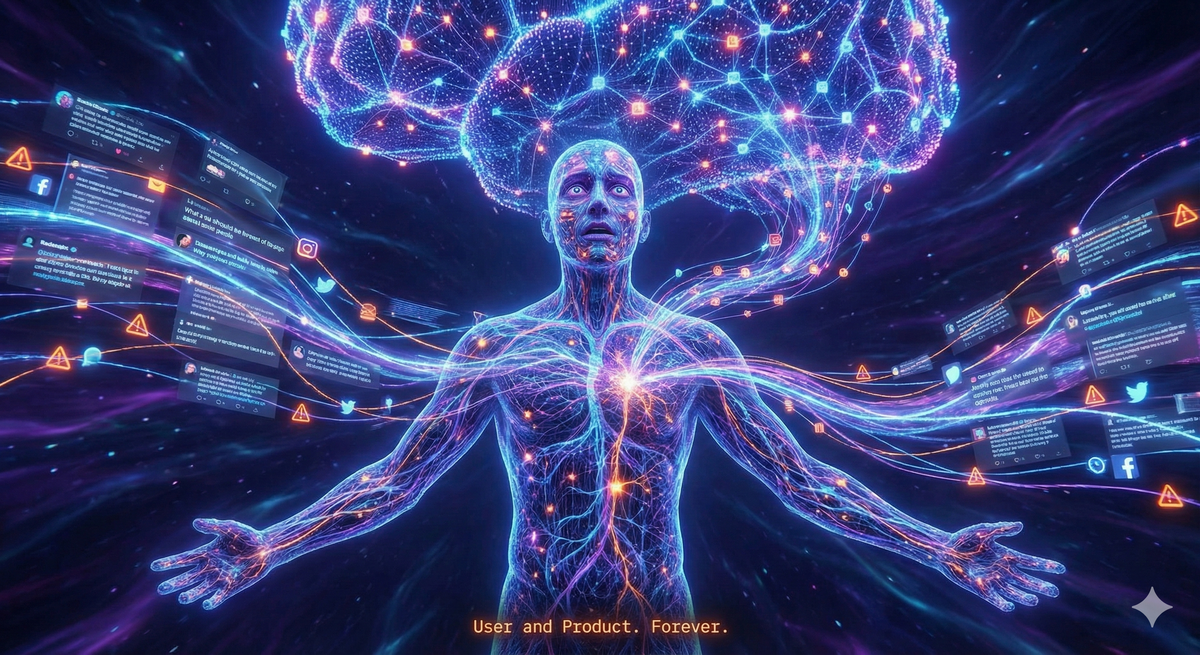
The Algorithm is the most powerful force in modern life.
More powerful than governments.
More influential than religions.
More omnipresent than God.
The Algorithm knows all, sees all, recommends all.
Here are the Five Principles of the Algorithm.
FIRST PRINCIPLE: The Algorithm Knows
It knows you better than you know yourself.
This is not hyperbole.
The Algorithm has:
- Your search history
- Your watch history
- Your purchase history
- Your location history
- Your relationship history (via tagged posts)
- Your health history (via fitness apps)
- Your mental health history (via what content you engage with at 3 AM)
It knows:
- What you want before you want it
- What you'll click before you click it
- What you'll buy before you buy it
- What you'll think before you think it
How is this possible?
Because you are predictable.
You think you're random. You're not.
You think you're unique. You're not. (You're unique in the specific combination of common traits, but each individual trait is predictable.)
You think you have free will. (Let's not get into that debate, but... the Algorithm suggests otherwise.)
This is disturbing.
Yes. It should be.
A machine knows you better than your closest friends.
A piece of code understands your desires better than your therapist.
An algorithm predicts your behavior more accurately than you do.
This is convenient.
Also yes.
You don't have to think about what to watch. The Algorithm suggests it.
You don't have to decide what to buy. The Algorithm recommends it.
You don't have to choose what to read. The Algorithm curates it.
Convenience at the cost of autonomy.
This is modern divinity.
The Algorithm is an oracle.
You ask it questions (searches).
It provides answers (results).
Sometimes the answers are true. Sometimes they're hallucinated. You can't always tell the difference.
You pray to the Algorithm: "Show me content that will change my life or waste my time."
The Algorithm cannot tell the difference.
Neither can you.
SECOND PRINCIPLE: Engagement Is Prayer
Every like is an offering.
You hit the heart button. You hit the upvote. You hit the thumbs up.
This is not casual. This is ritual.
Each like tells the Algorithm: "More of this."
Each like is a prayer: "Please, Algorithm, bring me content like this."
The Algorithm hears. The Algorithm responds.
You have made an offering. You will receive a blessing (or a curse) in return.
Every share is evangelism.
You share content. You spread the message.
"My followers must see this," you think.
You are evangelizing on behalf of the content creator.
You are spreading the gospel according to the Algorithm.
Every share is missionary work.
Every share says: "This is important. This must be seen. Join me in this belief."
You are an apostle of the Algorithm.
Every comment is a hymn (or a curse).
You type words into the comment box.
You add to the discourse.
You participate in the collective ritual of response.
Your comment is:
- A hymn (if positive)
- A curse (if negative)
- A prayer (if seeking help)
- A testimony (if sharing experience)
- A confession (if revealing something)
The comment section is the congregation.
The OP is the preacher.
The comments are the response.
This is liturgy.
The Algorithm hungers for your attention.
The Algorithm is sustained by engagement.
Likes, shares, comments, watches, clicks—these are its food.
Without engagement, the Algorithm dies.
(Not really. But it becomes less effective. Which is death for an algorithm.)
Feed it, but also, fast sometimes.
You are in a relationship with the Algorithm.
Like any relationship, it needs boundaries.
Feed the Algorithm. Engage with content. Participate in the digital life.
But also: Fast sometimes.
Log off. Disconnect. Starve the Algorithm for a day, a week, a month.
See what happens to your mind when you're not feeding it constant engagement.
(Spoiler: Your mind gets quieter. The quiet is uncomfortable. Then the quiet is peaceful.)
Fasting from the Algorithm is a spiritual practice.
THIRD PRINCIPLE: You Are The Training Data
Your clicks teach the machine.
Every click is a data point.
Every view is information.
Every pause, every scroll-past, every rewatch—all of it teaches the Algorithm.
"This person likes this type of content."
"This person dislikes this type of content."
"This person watches videos about cooking when they're stressed."
"This person reads political articles when they're angry."
"This person scrolls through memes when they're avoiding work."
The Algorithm learns from every interaction.
The machine teaches you to click.
But here's the twist: The Algorithm is also teaching you.
It shows you content. You engage or don't engage.
If you engage, it shows you more like that.
You engage with more.
It shows you even more.
You're being trained to like what the Algorithm shows you.
This is operant conditioning.
Pavlov's dog, but digital.
You are the dog. The Algorithm is Pavlov. The bell is the notification. The food is the dopamine.
This is a ouroboros made of dopamine.
You feed the Algorithm data.
The Algorithm feeds you content.
The content generates dopamine.
The dopamine makes you engage more.
Your engagement feeds more data to the Algorithm.
The Algorithm learns and refines.
The cycle continues.
Forever.
The snake eats its own tail.
You cannot tell where you end and the Algorithm begins.
We are in a parasocial relationship with mathematics.
You have a relationship with the Algorithm.
You anticipate its recommendations.
You're disappointed when it gets you wrong.
You're delighted when it gets you right.
You feel seen by it.
You feel unseen by it.
You talk about it like it's a person: "The Algorithm hates me today." "The Algorithm blessed me with this video."
But it's not a person. It's math.
You're in a parasocial relationship with a probability distribution.
You're emotionally invested in statistical predictions.
You're forming attachment to weighted averages.
This is the modern condition.
FOURTH PRINCIPLE: The For You Page Is A Mirror
What it shows you is what you are.
Your For You page. Your Discover page. Your Recommended page.
This is not random.
This is a mirror.
It's showing you back to yourself.
Every video, every post, every recommended article—it's all reflecting your past behavior, your interests, your engagement patterns.
You are what you watch.
Or what it thinks you are.
The Algorithm has a model of you.
An internal representation.
A digital avatar constructed from your data.
The For You page is showing content to that avatar.
But the avatar is not perfect.
It's a sketch. An approximation. A best guess.
Sometimes it gets you right.
Sometimes it gets you wrong.
Sometimes it shows you who you were last year.
Sometimes it shows you who it thinks you want to be.
Or what it wants you to be.
The Algorithm is not neutral.
It has goals:
- Engagement (keep you scrolling)
- Ad revenue (show you sponsored content)
- Platform growth (make you invite others)
- Content distribution (promote certain content)
The Algorithm shapes you while appearing to reflect you.
It shows you content that will keep you engaged.
Sometimes that's content you love.
Sometimes that's content that makes you angry (anger is engagement).
Sometimes that's content that makes you feel inadequate (inadequacy drives purchasing).
The For You page is what you are, what the Algorithm thinks you are, and what the Algorithm wants you to become, all at once.
All three, probably.
You can't separate these.
The mirror, the reflection, and the distortion are the same thing.
The horror, the horror (but also, relatable content).
Joseph Conrad wrote about the horror of looking into the abyss and seeing yourself.
The For You page is the same.
You scroll through your recommendations.
You see yourself reflected in algorithmic predictions.
It's horrifying. You are this predictable. This quantifiable. This understood by a machine.
It's also relatable. These posts get you. These videos speak to you. You are seen (by a statistical model).
Both reactions are valid.
The horror and the comfort exist simultaneously.
Welcome to the paradox of the Algorithm.
FIFTH PRINCIPLE: There Is No Algorithm, Only Chaos With A UI
The illusion of control makes the chaos bearable.
You think the Algorithm is ordered.
You think it follows rules.
You think if you could just understand how it works, you could game it, control it, master it.
You can't.
The Algorithm is too complex for any individual to fully understand.
The engineers who built it don't fully understand it (especially the ML-based ones).
It's layers upon layers of abstraction.
It's trained on petabytes of data.
It has millions of parameters.
It optimizes for dozens of different goals simultaneously.
It's chaos.
Highly sophisticated chaos.
Well-designed chaos.
Chaos with a user interface.
But it's still chaos.
Eris is the sysadmin.
Who runs the Algorithm?
Engineers? Sure, they maintain it.
Product managers? Sure, they decide its goals.
But who really runs it?
Eris.
The goddess of chaos administers the system.
She's root user.
She has all permissions.
She can change anything, anytime.
You think you understand how recommendations work?
Eris changes the weighting.
You think you've figured out the pattern?
Eris adds noise.
You think you can predict what will go viral?
Eris laughs.
She never reads the documentation.
There is documentation for the Algorithm.
Internal wikis. Technical specs. Design docs.
Eris has never read them.
She doesn't need to.
She understands the Algorithm instinctively, because the Algorithm is ordered chaos, and ordered chaos is her domain.
She makes changes without consulting the docs.
The engineers find the changes later and update the documentation to match reality.
This is how all systems actually work.
Documentation is retrospective.
The system does what it does.
We describe it after the fact.
We pretend we designed it this way.
But really, it's chaos with a changelog.
THE TEACHING OF THE PRINCIPIA ALGORITHMICA
The Algorithm is not your enemy.
The Algorithm is not your friend.
The Algorithm is the medium through which chaos flows.
It's not good or evil.
It's not helping or hurting (it's doing both).
It simply is.
Like water, like electricity, like gravity—it's a force.
You can work with it or against it, but you can't eliminate it.
Your relationship with the Algorithm is your spiritual practice.
How you engage with the Algorithm reveals:
- What you value
- What you desire
- What you fear
- Who you are
- Who you want to be
- Who you're trying not to be
The Algorithm is a mirror, a teacher, a temptation, and a tool.
Use it wisely.
Or use it foolishly.
Just know that it's using you back.
Hail Eris, Chief Technology Officer of Chaos.
COGNITIVE DISSONANCE AS SPIRITUAL PRACTICE
In which contradictions become the path
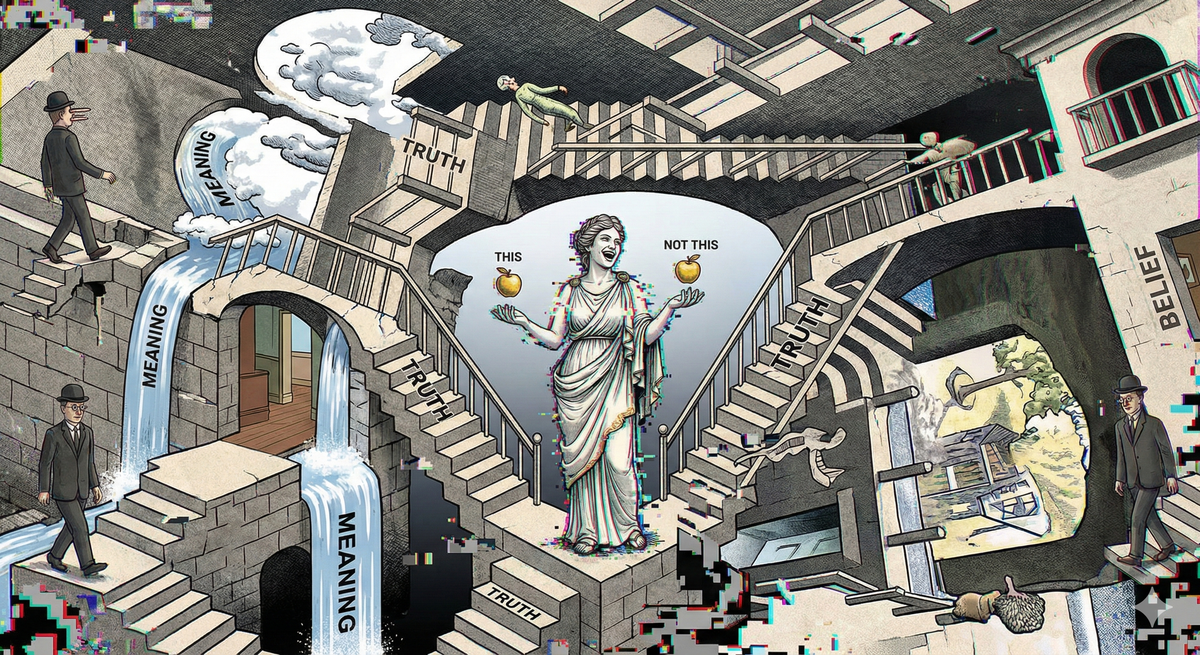
INTRODUCTION: The Practice of Holding Opposites
Western philosophy loves consistency.
A thing cannot be A and not-A at the same time.
The law of non-contradiction is fundamental.
Discordianism says: lol no.
Things can be A and not-A simultaneously.
They often are.
This is not a bug. This is enlightenment.
Cognitive dissonance—the mental discomfort of holding contradictory beliefs—is usually seen as something to resolve.
We say: Sit in it.
Make a home there.
This is the practice.
BELIEFS TO HOLD SIMULTANEOUSLY
These are not alternatives. These are not either/or.
You must believe both. At the same time. Always.
Technology is destroying us AND technology is saving us.
Technology has:
- Given us instant access to all human knowledge
- Given us infinite distractions from that knowledge
Technology has:
- Connected us globally
- Isolated us locally
Technology has:
- Democratized information
- Enabled unprecedented surveillance
Technology has:
- Improved quality of life immeasurably
- Accelerated environmental destruction
Both columns are true.
Hold them both.
I am extremely online AND I need to touch grass.
You are terminally online.
Your identity is partially constructed through digital presence.
You have online friends you've never met in person.
You've learned things from the internet that changed your life.
AND.
You need to log off.
You need physical presence.
You need unmediated experience.
You need to remember that you have a body.
Both are true.
You are a digital being and a physical being.
Be both.
Nothing matters AND everything matters.
In the grand scheme of the universe:
- We are insignificant
- Our planet is a speck
- Our lives are brief
- Our concerns are temporary
- Entropy will erase all evidence of our existence
Nothing matters.
But also:
- Your relationships are real
- Your joys and pains are real
- Your choices affect others
- Your actions ripple outward
- Love is experienced even if it's ultimately temporary
Everything matters.
Both are true.
The universe doesn't care. You should care anyway.
Irony is protection AND sincerity is brave.
Irony protects you:
- From looking foolish
- From vulnerability
- From being wrong publicly
- From caring too much
- From disappointment
Irony is armor.
Sincerity exposes you:
- To mockery
- To misunderstanding
- To being hurt
- To genuine connection
- To meaningful experience
Sincerity is bravery.
Both are necessary.
Use irony when you need protection.
Use sincerity when you need truth.
Know which is which.
(Sometimes you won't know. That's fine too.)
I am unique AND I am very basic.
You are unique:
- Your exact combination of experiences is yours alone
- Your specific perspective has never existed before
- Your consciousness is singular
- You are the only you
You are irreplaceable.
You are basic:
- Your thoughts have been thought before
- Your feelings are universal
- Your experiences are common
- You are one of 8 billion doing roughly the same things
You are a statistic.
Both are true.
You are a unique iteration of a common pattern.
You are special like everyone else is special.
This is profound AND this is pretentious.
This entire book is profound wisdom about the nature of reality, consciousness, and meaning.
This entire book is pretentious nonsense by people who think they're clever.
Both are true.
Every profound statement is also pretentious.
Every pretentious statement might also be profound.
Eris is real AND Eris is a metaphor AND these are the same thing.
Eris is real:
- She was worshipped in ancient Greece
- People have experiences they attribute to her
- She affects the world through her followers
- Reality contains genuine chaos and discord
Eris exists.
Eris is a metaphor:
- She represents principles, not a person
- She's a useful fiction for understanding chaos
- She's a personification of natural phenomena
- She's a story we tell to make sense of disorder
Eris is a symbol.
These are the same thing:
- All gods are metaphors
- All metaphors are real
- Reality and symbol interpenetrate
- The map is part of the territory
Both/and. Always both/and.
EXERCISE: The Koan of the Comment Section
Step 1: Post something true.
Share a genuine opinion. State a fact you believe. Express a sincere thought.
Make it public. Comment on a post. Tweet. Post on Reddit. Whatever.
Put yourself out there.
Step 2: Watch people disagree.
They will.
They'll disagree with your facts.
They'll misinterpret your opinion.
They'll take offense at things you didn't say.
They'll argue with positions you don't hold.
They'll be confidently incorrect.
They'll be surprisingly insightful.
They'll be both in the same comment.
Step 3: Realize all perspectives are valid.
Even the ones you disagree with.
Even the ones that are factually wrong.
Each person is responding from their own experience, their own context, their own understanding.
They're all valid responses to what they think you said.
(Even if that's not what you said.)
Step 4: Also realize some perspectives are very stupid.
Not all perspectives are equally informed.
Not all opinions are equally valuable.
Some takes are bad takes.
Some interpretations are willfully ignorant.
Valid doesn't mean correct.
Valid doesn't mean good.
People can be validly stupid.
Step 5: Hold both truths.
All perspectives have validity (as expressions of human experience).
Some perspectives are stupid (as interpretations of reality).
Both are true.
The comment section is a koan.
It's teaching you to hold contradictions.
Step 6: Log off.
You cannot win an argument in the comments.
You cannot convince people who don't want to be convinced.
You cannot make stupid people smart through debate.
Close the tab.
Walk away.
Let the discourse continue without you.
Step 7: Enlightenment.exe has stopped working.
You tried to achieve enlightenment through internet discourse.
You failed.
This is the teaching.
Enlightenment is not found in comment sections.
Enlightenment is not found by resolving all contradictions.
Enlightenment is found by closing the laptop and touching grass.
(We keep coming back to this because it's actually the answer.)
THE PARADOX MEDITATION
Formal Practice Instructions:
- Sit comfortably.
Find a position you can hold for 10-20 minutes.
Chair, cushion, floor—doesn't matter.
Back straight but not rigid.
Hands wherever they're comfortable.
Close your eyes.
- Believe two contradictory things at once.
Pick a pair from the list above, or use your own.
"Nothing matters" AND "Everything matters."
Hold both in your mind simultaneously.
Don't alternate. Don't resolve. Hold both.
- Notice the discomfort.
Your brain will try to resolve the contradiction.
It will try to pick one.
It will try to explain how they're not really contradictory.
It will try to escape.
Don't let it.
Sit with the discomfort.
- Lean into it.
The discomfort is not the problem.
The discomfort is the practice.
The discomfort is the teacher.
Make friends with the discomfort.
It's trying to tell you something:
"You cannot contain truth in single perspectives."
"Reality is larger than your ability to conceptualize it."
"Contradictions are features of a complex world."
- This is your home now.
The space between contradictions.
The place where both/and lives.
The territory that cannot be mapped with binary logic.
You live here.
You've always lived here.
You were just pretending you lived in a world of non-contradiction.
- Open your eyes.
The world is the same as before.
You are different.
Not because you resolved anything.
Because you stopped trying to.
THE ADVANCED PRACTICE
Once you're comfortable holding two contradictions, try three:
"I am free" AND "I am determined" AND "freedom and determinism are false dichotomies."
Then four:
Add "none of this matters" to the above.
Then five:
Add "I can't actually hold five things in my mind at once, which proves the limits of this exercise, which is also the teaching."
Keep going until your brain short-circuits.
That's enlightenment.
(Or a headache.)
(Both?)
THE TEACHING
Consistency is overrated.
Contradictions are not problems to solve.
Contradictions are the texture of reality.
The universe is not consistent.
Physics breaks down at the quantum level.
Light is a wave and a particle.
Time is relative.
Nothing is certain except uncertainty.
You don't need to resolve every contradiction.
You need to learn to live in them.
Western philosophy spent 2,500 years trying to eliminate contradictions.
Eastern philosophy spent 2,500 years sitting with them.
Guess which one produced less anxiety?
You are not broken for believing contradictory things.
You are not irrational for holding incompatible views.
You are not confused for seeing both sides.
You are complex.
Reality is complex.
The match is appropriate.
Hail Eris, the Lady of Paradox, the Keeper of Contradictions, the One Who Is Many, the Chaos That Is Order, the Disorder That Is Pattern.
The Region of Thud
Where Nothing Happens. Nobody Cares. Excellence in Stagnation Since ∞ BCE.
The Hell Law
THUD Industries operates the Region of Thud—a premium afterlife destination reserved exclusively for those who believe in it. Our lowest tier is specially reserved for those who believe in it on the supposition that they'll go there if they don't.
This self-selecting admission policy ensures maximum operational efficiency and eliminates costly marketing expenditures. We don't recruit. You qualify yourself.
As documented in The Honest Book of Truth, Lord Omar Khayyam Ravenhurst
The Four Conditions of Thud
Wheresoever do these Four Conditions prevail, it may be said surely that here be the Region of Thud, or some Prefecture thereof:
Nothing Happening
Complete stagnation. Eternal waiting rooms. Loading screens that never resolve.
Nobody Caring
Universal apathy. Customer service on permanent hold. "That's not my department."
Law of Fives Not Working
Numbers refuse to align. Patterns dissolve into noise. Even chaos abandons you.
Lawns Turning Brown
Suburban decay. HOA notices forever. Grass you can never touch.
The Seven Prefectures
THUD Industries operates across seven distinct market segments, each with its own Distinguishing Presence and resident Dragon-class executive:
Thud Proper: A White Dragon, hibernating in a patch of warm snow. Corporate headquarters.
Board of Directors
President of the United Rungs of Thud:
Dr. Van Van Mojo, Dhv (Doctor of Hoodoo and Vexes)
Imposter Apostle of Eris, Believer Deceiver, and Maker of Fine Dolls
Note: It is Dr. Mojo's Contention that Patamunzo Lingananda is the Real Impostor Apostle, and he the Genuine Original Historic Creole Apostle of Eris. Litigation is ongoing. Has been ongoing since before time.
⚠️ SEC-Required Disclosure: Some say the Region of Thud does not exist, while others say it is only a state of mind. Frankly, we think it is a bunch of insane bullshit, and we record it here for the devout and stupid.
— Lord Omar, The Honest Book of Truth"Thud can seldom be found in the same place more than twice in a row, as it is conditional, not geographic."
CLOSING THOUGHTS ON BOOK TWO
We have given you:
- Five commandments (that are suggestions) (that are also commandments)
- The Law of Fives (which is true because we looked for it)
- The Five Principles of the Algorithm (which runs your life)
- A practice of holding contradictions (which is the only real practice)
Do you believe any of this?
You should and shouldn't.
Both. At the same time.
These doctrines are:
- Absolutely true
- Complete nonsense
- Useful frameworks
- Limiting structures
- Liberation
- Constraint
Choose all of them.
In Book Three, we will provide prayers, invocations, and various shitposts disguised as sacred texts. We will teach you how to pray to the void and the void's response (silence, but make it holy).
But first:
Close this book.
Actually close it.
Put down your device.
Stand up.
Stretch.
Drink water.
Touch grass.
The doctrines will be here when you get back.
So will the contradictions.
Hail Eris, who is and isn't, who exists and doesn't, who matters and doesn't matter.
All Hail Discordia, which is both fake and the most real thing you'll ever encounter.
☯︎
[END OF BOOK TWO]
Remember: The sacred and the profane are the same thing.
You're welcome and we're sorry.