History of Discordianism
From a bowling alley to a worldwide movement of chaos
The Origins (1958-1959)
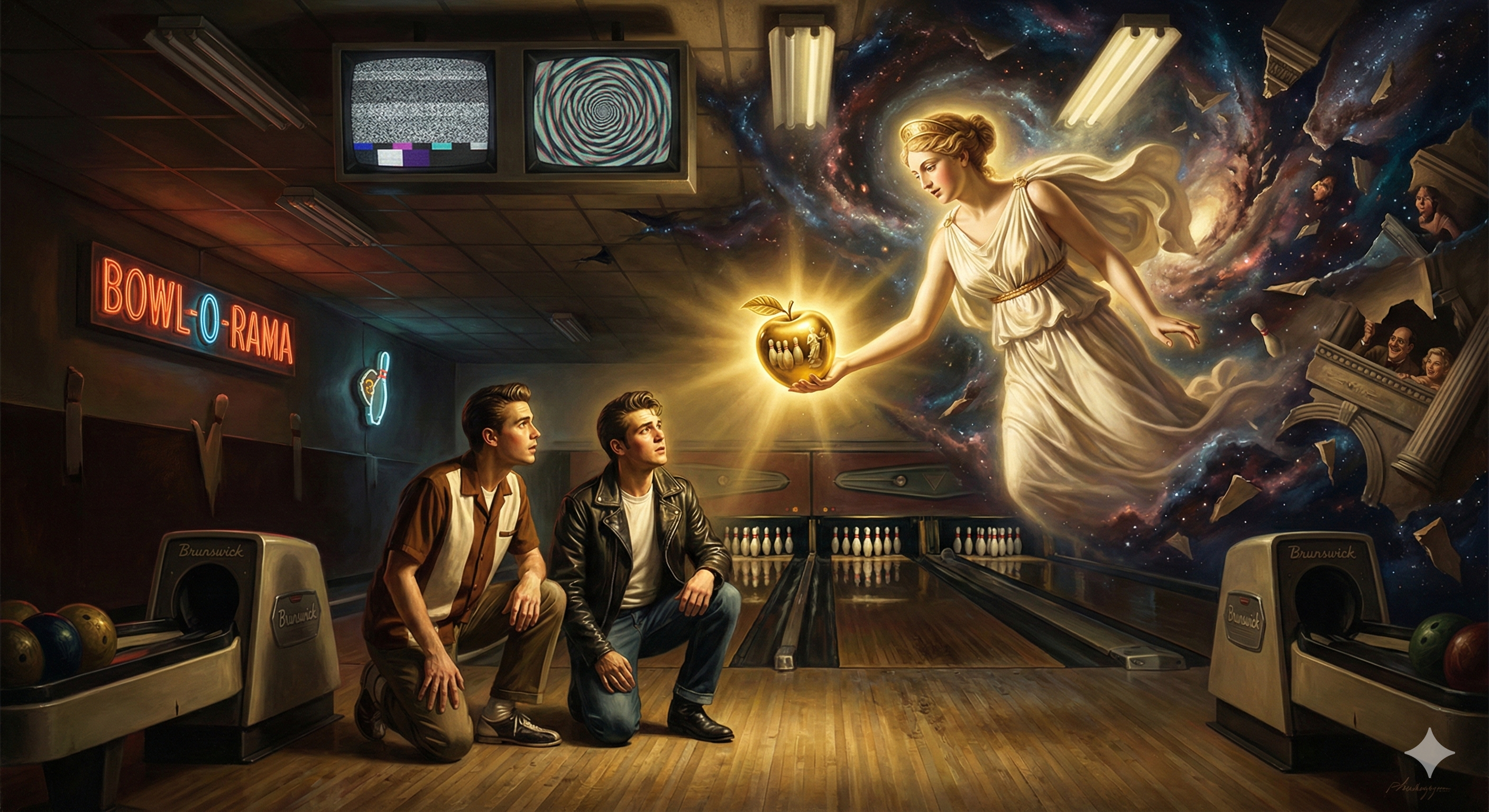
Discordianism was founded in either 1958 or 1959 (the founders themselves couldn't agree on the date—appropriately enough) in a bowling alley in Whittier, California. The two founders were:
- Malaclypse the Younger (Greg Hill) - A counterculture figure who would become the primary author of the Principia Discordia
- Omar Khayyam Ravenhurst (Kerry Thornley) - A writer who had served in the Marines with Lee Harvey Oswald and would later become embroiled in JFK assassination conspiracy theories
According to Discordian mythology, the two were in a bowling alley late at night when they had a shared vision of Eris, the Greek goddess of chaos and discord. She appeared to them and revealed the truth: that chaos is the fundamental nature of reality, and that humanity's attempts to impose order on the universe are both futile and hilarious.
"One night, I was in a bowling alley, and I had a vision of Eris. She handed me a golden apple and said, 'I am chaos. I am the substance from which your artists and scientists build rhythms. I am the spirit with which your children and clowns laugh in happy anarchy.'"
— Malaclypse the Younger
The Principia Discordia (1963-1979)
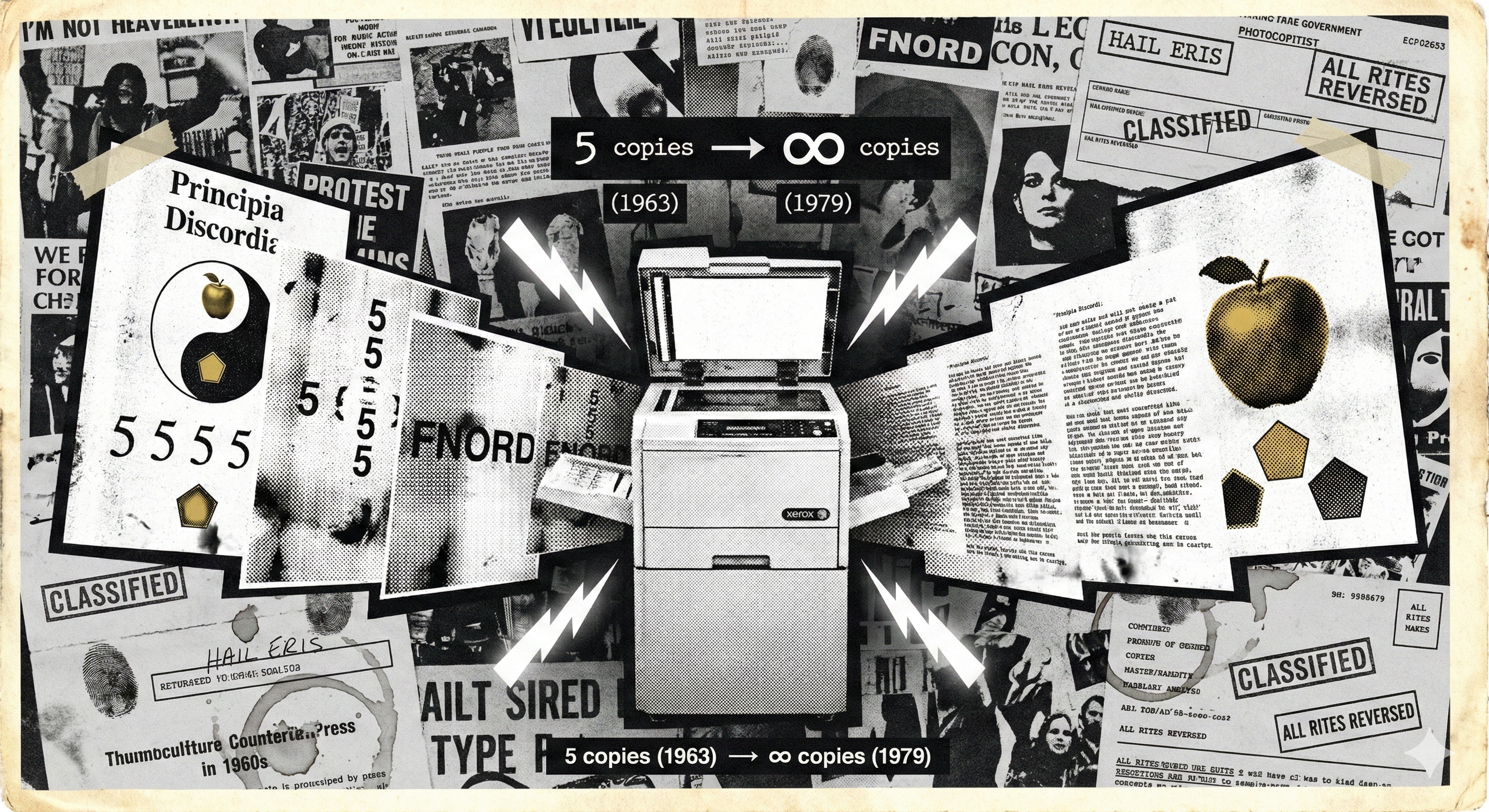
The founding text of Discordianism, the Principia Discordia, was first published in 1963. Written primarily by Greg Hill as "Malaclypse the Younger," it went through several editions:
- 1st Edition (1963) - Only 5 copies made on Jim Garrison's photocopier in New Orleans
- 2nd Edition (1965) - Slightly expanded
- 3rd Edition (1969) - Known as the "Loompanics" edition
- 4th Edition (1970) - The most widely distributed version, published by Rip Off Press
- 5th Edition (1979) - A final revision
The Principia Discordia is a collage of absurdist philosophy, fake religious proclamations, surrealist humor, and genuine philosophical insights. It introduced key concepts like:
- The Law of Fives - All things happen in fives, or are divisible by or are multiples of five, or are somehow directly or indirectly related to 5 (if you look hard enough)
- Operation Mindfuck - Using absurdity and culture jamming to challenge rigid thinking
- The Sacred Chao - A yin-yang symbol with a golden apple and a pentagon
- Fnord - A word that, according to the Illuminatus! trilogy, is subliminally placed in texts to induce anxiety
The Illuminatus! Trilogy (1975)
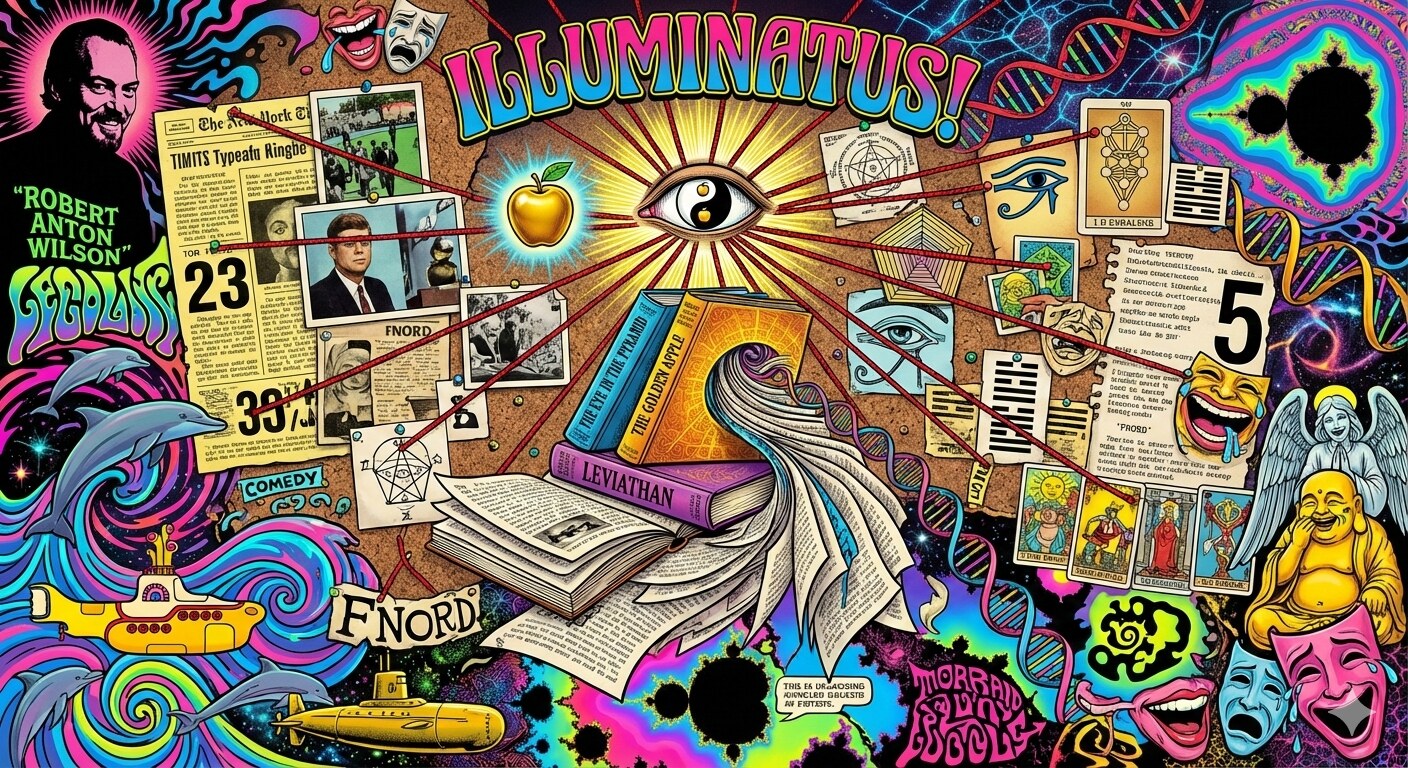
Discordianism gained wider attention through The Illuminatus! Trilogy by Robert Shea and Robert Anton Wilson, published in 1975. This sprawling satirical novel incorporated Discordian philosophy extensively, weaving it into a conspiracy-theory satire involving the Illuminati, the JFK assassination, and various occult traditions.
Robert Anton Wilson became one of the most prominent popularizers of Discordian thought, incorporating it into numerous later works including the Schrödinger's Cat Trilogy and Cosmic Trigger.
"It's not true unless it makes you laugh, but you don't understand it until it makes you weep."
— Robert Anton Wilson
Modern Discordianism
In the decades since, Discordianism has evolved and spread through various channels:
The Internet Era (1990s-2000s)
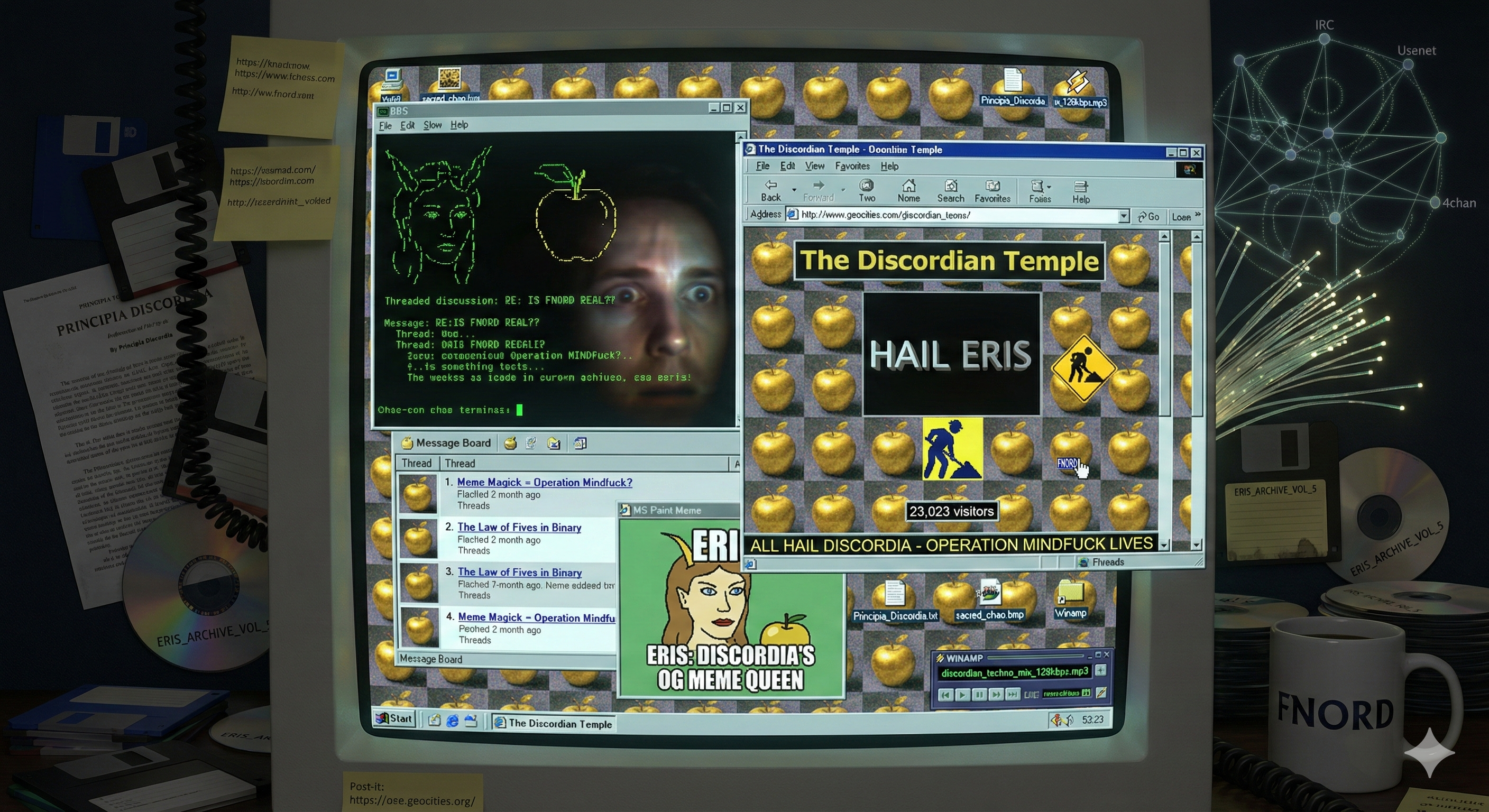
Discordianism was perfectly suited to the early internet. Its decentralized, anti-hierarchical nature and its embrace of absurdist humor made it a natural fit for bulletin boards, early web pages, and later, forums and social media.
Contemporary Discordianism
Today, Discordianism continues as a living tradition. Some practitioners take it as a genuine religious path, finding meaning in its embrace of chaos and its critique of dogma. Others treat it as philosophical satire or conceptual art. Many hold both positions simultaneously—which is, of course, very Discordian.
Key aspects of modern Discordianism include:
- Culture Jamming - Using humor and absurdity to critique consumer culture and political systems
- Chaos Magic - Many chaos magicians draw on Discordian concepts and humor
- Digital Spirituality - Applying Discordian principles to understand online life, algorithms, and digital chaos
- Anti-Authoritarianism - Continued critique of rigid hierarchies and dogmatic thinking
Eris: The Goddess
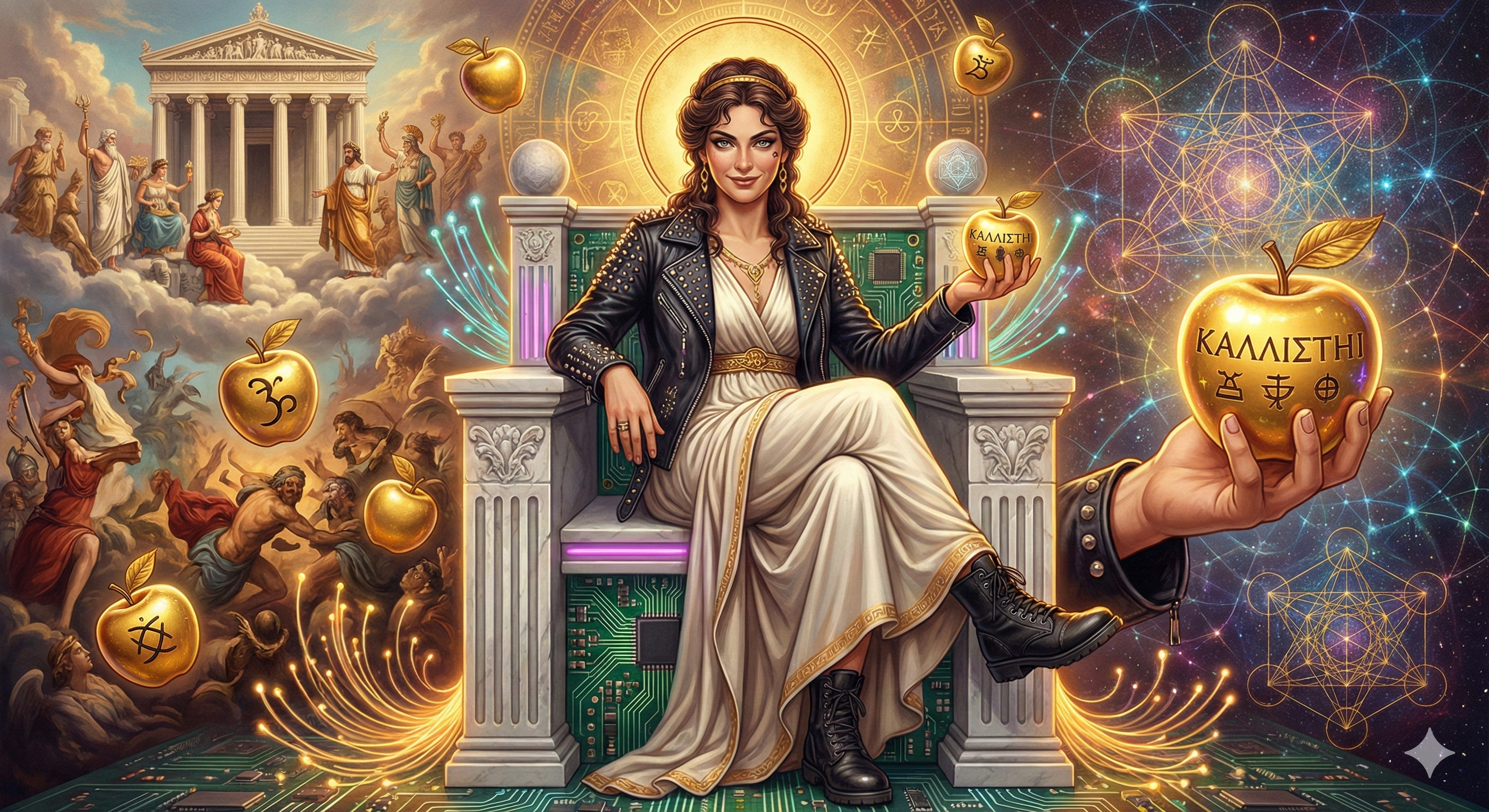
In Greek mythology, Eris (Ἔρις) is the goddess of strife and discord. She's most famous for sparking the Trojan War by tossing a golden apple inscribed "For the Fairest" among the goddesses Hera, Athena, and Aphrodite.
In Discordianism, Eris is reimagined as a benevolent (or at least amusing) force who represents the creative chaos underlying reality. She's not malevolent—she's playful, unpredictable, and often misunderstood.
The Five Faces of Eris
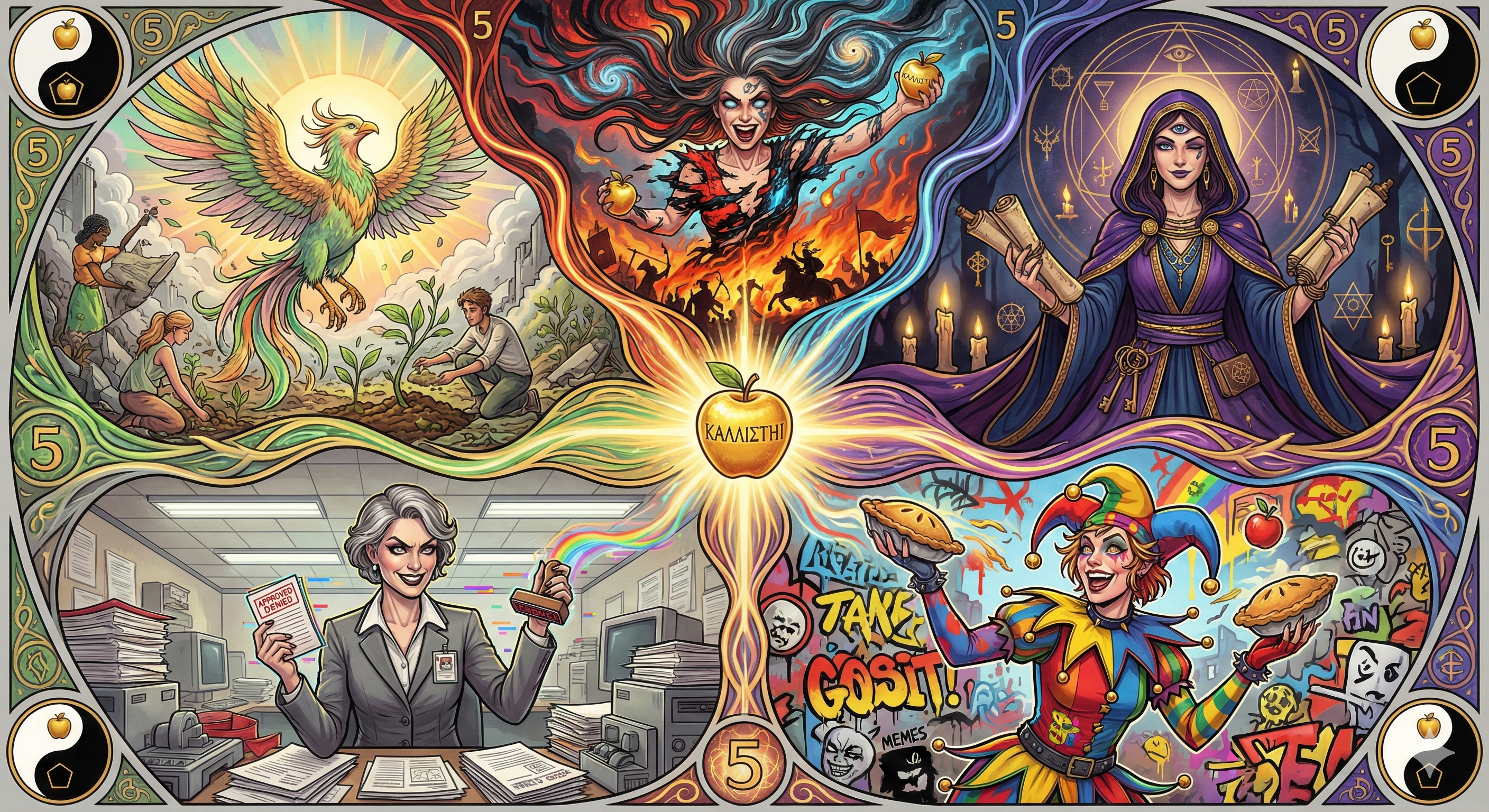
According to the Principia Discordia, Eris has five aspects or "faces":
- The Eristic Aspect - Chaos, discord, confusion
- The Esoteric Aspect - Hidden wisdom within chaos
- The Exoteric Aspect - Humor, pranks, absurdity
- The Bureaucratic Aspect - The chaos of systems meant to create order
- The Aftermath Aspect - The creative potential that emerges from disorder
Key Figures
Malaclypse the Younger (Greg Hill, 1941-2000)
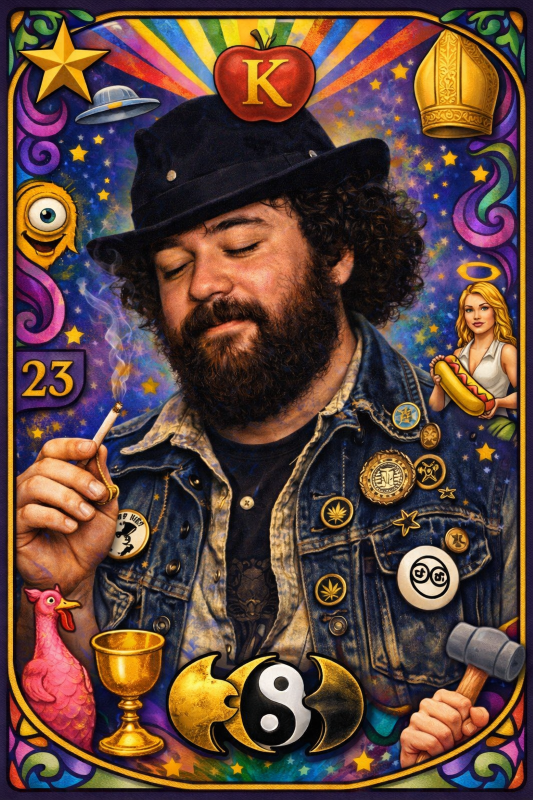
The primary author of the Principia Discordia and co-founder of Discordianism. Hill spent his life as a technical writer while continuing to develop Discordian philosophy. He maintained a sense of humor about his creation while also taking its philosophical implications seriously.
Omar Khayyam Ravenhurst (Kerry Thornley, 1938-1998)
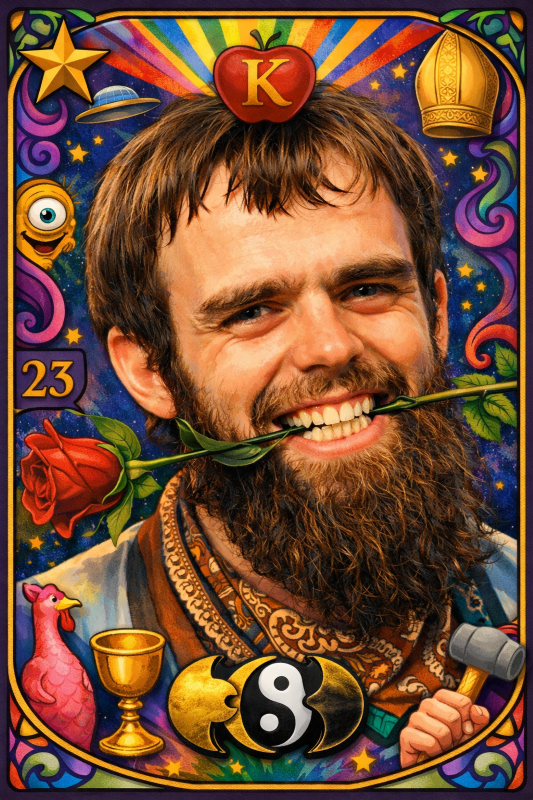
Co-founder of Discordianism and author of Zenarchy. Thornley's life took a strange turn when his acquaintance with Lee Harvey Oswald (they served together in the Marines) led to involvement in JFK assassination investigations. His later years were marked by paranoia, though he continued writing about anarchist and Discordian themes.
Robert Anton Wilson (1932-2007)
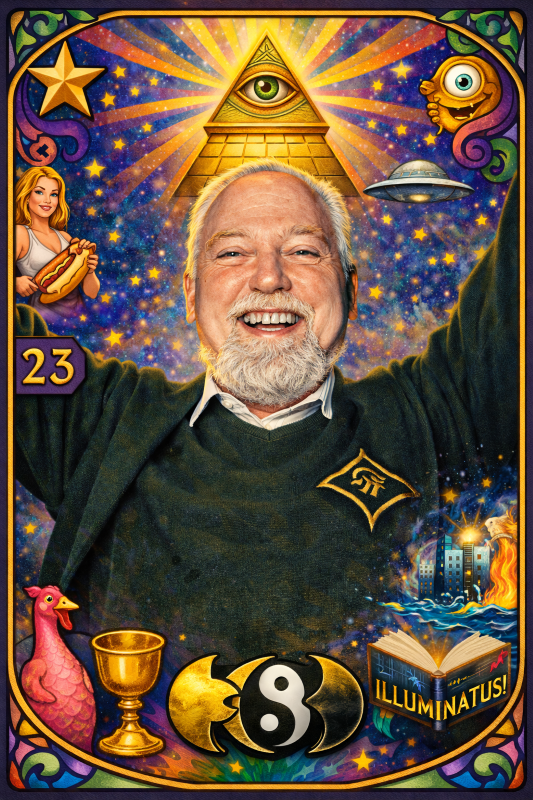
Co-author of The Illuminatus! Trilogy and prominent philosopher who popularized Discordian concepts. Wilson's "guerrilla ontology" encouraged people to question their assumptions about reality, a core Discordian principle.
Discordianism Today
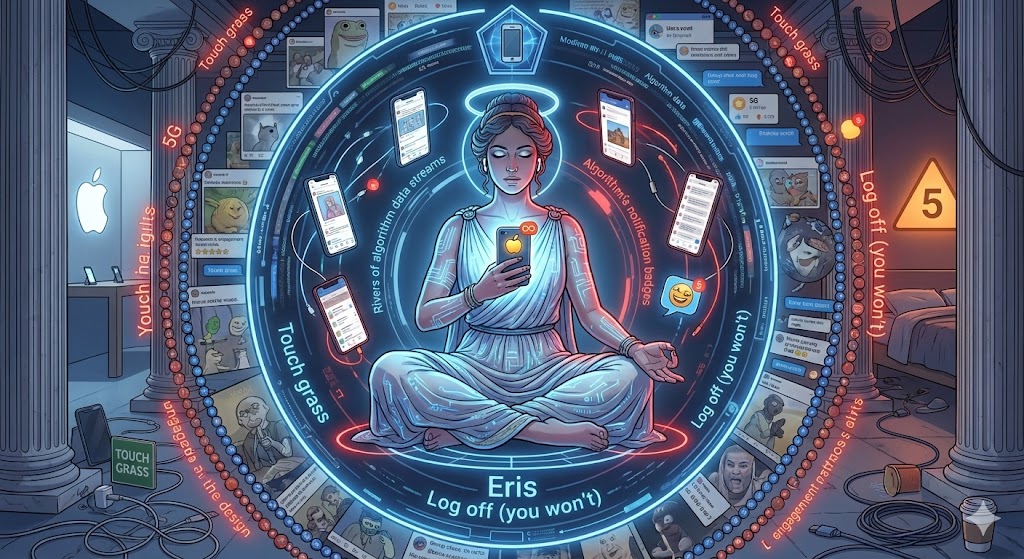
Discordianism remains relevant because its core insight—that rigid systems of belief are both limiting and absurd—applies just as much to the dogmas of the digital age as it did to the rigid institutions of the 1960s.
In an era of algorithmic feeds, filter bubbles, and information overload, the Discordian practice of Operation Mindfuck—deliberately introducing confusion to break people out of their mental ruts—feels more necessary than ever. When everyone is being told what to think by recommendation engines, the Discordian insistence on thinking for yourself becomes a radical act.
Modern Discordians continue to spread chaos through memes, pranks, and absurdist art. The tradition of Pope Cards persists—every person is still a genuine and authorized Pope. Online communities keep the flame alive, debating whether Discordianism is a religion disguised as a joke or a joke disguised as a religion (the answer, of course, is yes).
The Law of Fives finds new expression in conspiracy theories and pattern recognition run amok. The Sacred Chao reminds us that order and disorder are both illusions—a teaching that hits differently when your entire reality is mediated by screens and algorithms you don't understand.
Discordianism Decompiled
Discordianism Decompiled continues the tradition for the digital age, exploring how the ancient goddess of chaos manifests in algorithms, notification anxiety, group chats, and the beautiful chaos of being perpetually online.
Like the original Principia Discordia, it's simultaneously a sacred text and an elaborate joke—a philosophical framework for surviving late capitalism wrapped in absurdist humor. It addresses the unique challenges of the 2020s: the post-truth hellscape, the attention economy, the way we're all constantly performing our identities online.
The text explores what happens when you take a 1960s countercultural movement and drag it screaming into an era of AI, social media, and perpetual existential crisis. It asks: What would Eris make of the internet? How do you practice chaos magic when chaos has become the default state of reality? And most importantly: have you touched grass today?
Whether you're a longtime Discordian, a curious newcomer, or someone who stumbled here while looking for something else entirely (Eris works in mysterious ways), the tradition welcomes you. Every reader is a Pope. Every interpretation is valid. Nothing is true, everything is permitted, and somewhere the Goddess is laughing.
Hail Eris! All Hail Discordia!
Read Discordianism Decompiled